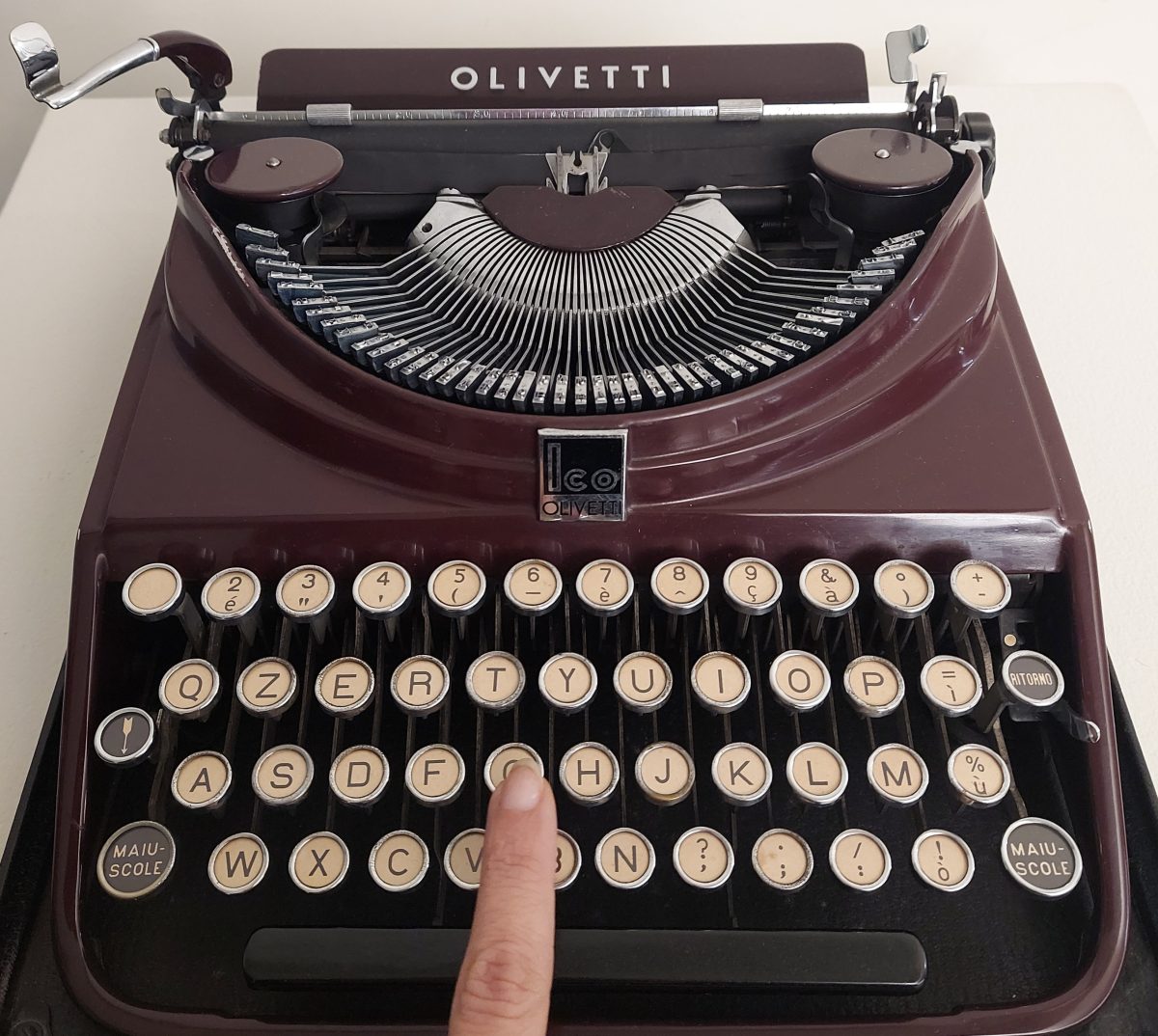

a cura di Rosanna Frattaruolo
"At Last the Secret Is Out" in Tell Me the Truth About Love, by W.H. Auden, translation by Gilberto Forti, Adelphi, 1994traduzione di Gilberto Forti
Alla fine il segreto viene fuori,
         come deve succedere ogni volta,
è matura la deliziosa storia
        da raccontare all’amico del cuore:
davanti al tè fumante e nella piazza
         la lingua ottiene quello che voleva;
le acque chete corrono profonde,
         mio caro, non c’è fumo senza fuoco.

Dietro il morto in fondo al serbatoio,
       dietro il fantasma sul prato del golf,
dietro la dama che ama il ballo e dietro
       il signore che beve come un matto,
sotto l’aspetto affaticato,
       l’attacco di emicrania e il sospiro
c'è sempre un'altra storia,
       c’è più di quello che si mostra all'occhio.

Per la voce argentina che d’un tratto
        canta lassù dal muro del convento.
per l'odore che viene dai sambuchi,
        per le stampe di caccia nell’ingresso,
per le gare di croquet in estate,
        la tosse, il bacio, la stretta di mano,
c’è sempre un segreto malizioso
        un motivo privato in tutto questo.


At last the secret is out,
        as it always must come in the end,
The delicious story is ripe
        to tell to the intimate friend;
Over the tea-cups and in the square
        the tongue has its desire;
Still waters run deep, my dear,
        there's never smoke without fire.

Behind the corpse in the reservoir,
        behind the ghost on the links,
Behind the lady who dances
        and the man who madly drinks,
Under the look of fatigue
        the attack of migraine and the sigh
There is always another story,
        there is more than meets the eye.

For the clear voice suddenly singing,
        high up in the convent wall,
The scent of the elder bushes,
        the sporting prints in the hall,
The croquet matches in summer,
        the handshake, the cough, the kiss,
There is always a wicked secret,
        a private reason for this.
Wystan Hugh Auden nacque a York, in Inghilterra, il 21 febbraio 1907. Si trasferì a Birmingham durante l’infanzia e studiò alla Christ Church di Oxford. Da giovane fu influenzato dalla poesia di Thomas Hardy e Robert Frost, così come da William Blake, Emily Dickinson, Gerard Manley Hopkins e dai versi in inglese antico. A Oxford, la sua precocità come poeta fu immediatamente evidente e strinse amicizie durature con due colleghi scrittori, Stephen Spender e Christopher Isherwood. Nel 1928, la raccolta di Auden, Poems, fu stampata privatamente, ma fu solo nel 1930, quando fu pubblicata un’altra raccolta intitolata Poems (sebbene i suoi contenuti fossero diversi), che Auden si affermò come la voce guida di una nuova generazione. Da allora, Auden è stato ammirato per il suo insuperabile virtuosismo tecnico e la capacità di scrivere poesie in quasi ogni forma di versi immaginabile; l’incorporazione nel suo lavoro di cultura popolare, eventi correnti e discorsi vernacolari; e anche per la vasta gamma del suo intelletto, che attingeva facilmente da una straordinaria varietà di letterature, forme d’arte, teorie sociali e politiche e informazioni scientifiche e tecniche. Aveva un’arguzia notevole e spesso imitava gli stili di scrittura di altri poeti come Dickinson, W. B. Yeats e Henry James. La sua poesia racconta spesso, letteralmente o metaforicamente, un viaggio o una ricerca, e i suoi viaggi fornirono materiale ricco per i suoi versi. Auden visitò Germania, Islanda e Cina, prestò servizio nella guerra civile spagnola e, nel 1939, si trasferì negli Stati Uniti, dove incontrò il suo amante, Chester Kallman, e divenne cittadino americano. Le sue convinzioni cambiarono radicalmente tra la sua carriera giovanile in Inghilterra, quando era un ardente sostenitore del socialismo e della psicoanalisi freudiana, e la sua fase successiva in America, quando la sua preoccupazione principale divenne il cristianesimo e la teologia dei moderni teologi protestanti. Scrittore prolifico, Auden fu anche un noto drammaturgo, librettista, editore e saggista. Generalmente considerato il più grande poeta inglese del ventesimo secolo, la sua opera ha esercitato una grande influenza sulle generazioni successive di poeti su entrambe le sponde dell’Atlantico. W. H. Auden fu cancelliere dell’Academy of American Poets dal 1954 al 1973 e trascorse la maggior parte della seconda metà della sua vita tra residenze a New York City e in Austria. Morì a Vienna il 29 settembre 1973.
***
Wystan Hugh Auden was born in York, England, on February 21, 1907. He moved to Birmingham during childhood and was educated at Christ Church, Oxford. As a young man he was influenced by the poetry of Thomas Hardy and Robert Frost, as well as William Blake, Emily Dickinson, Gerard Manley Hopkins, and Old English verse. At Oxford, his precocity as a poet was immediately apparent, and he formed lifelong friendships with two fellow writers, Stephen Spender and Christopher Isherwood.
In 1928, Auden’s collection, Poems, was privately printed, but it wasn’t until 1930, when another collection titled Poems (though its contents were different) was published, that Auden was established as the leading voice of a new generation.
Ever since, Auden has been admired for his unsurpassed technical virtuosity and an ability to write poems in nearly every imaginable verse form; the incorporation in his work of popular culture, current events, and vernacular speech; and also for the vast range of his intellect, which drew easily from an extraordinary variety of literatures, art forms, social and political theories, and scientific and technical information. He had a remarkable wit, and often mimicked the writing styles of other poets such as Dickinson, W. B. Yeats, and Henry James. His poetry frequently recounts, literally or metaphorically, a journey or quest, and his travels provided rich material for his verse.Auden visited Germany, Iceland, and China, served in the Spanish Civil War, and, in 1939, moved to the United States, where he met his lover, Chester Kallman, and became an American citizen. His own beliefs changed radically between his youthful career in England, when he was an ardent advocate of socialism and Freudian psychoanalysis, and his later phase in America, when his central preoccupation became Christianity and the theology of modern Protestant theologians. A prolific writer, Auden was also a noted playwright, librettist, editor, and essayist. Generally considered the greatest English poet of the twentieth century, his work has exerted a major influence on succeeding generations of poets on both sides of the Atlantic.
W. H. Auden served as a Chancellor of the Academy of American Poets from 1954 to 1973, and divided most of the second half of his life between residences in New York City and Austria. He died in Vienna on September 29, 1973.
Gilberto Forti nasce il 12 aprile 1922 a Roma. Di famiglia ebraica, è costretto ad abbandonare gli studi in seguito alla promulgazione delle leggi razziali nel 1938. Giovanissimo milita come partigiano nella guerra di Resistenza, un’esperienza descritta con vibrante asciuttezza e un’esemplare attitudine riflessiva in numerose pagine della raccolta postuma di racconti dal titolo I latitanti. Nel 1945 inizia la sua collaborazione con l’agenzia di stampa statunitense Associated Press, decisiva per la formazione di uno stile fondato sull’esattezza e sulla concisione, ma che non rinuncia alla propria forza lirica e icastica. Nell’ottobre del 1956 inizia la collaborazione con l’editore Rusconi in qualità di caporedattore prima, e di direttore responsabile delle riviste “Gente” e “Gioia” poi. Allo stesso tempo collabora con diversi quotidiani. La sua idea di giornalismo rimarrà sempre aperta al grande pubblico, capace di veicolare un’informazione critica e di dare spazio a inchieste e argomenti di rilevanza culturale.
Un’attenzione particolare merita la sua intensa e felice attività di traduttore dall’inglese, dal tedesco e dallo svedese, ed è nella resa di testi poetici che Forti raggiunge l’eccellenza. Nel 1970 vengono pubblicate le sue versioni delle Settanta liriche di Goethe e nel 1973, comprese nel volume del Teatro, le tragedie Ifigenia in Tauride e Torquato Tasso. Con grande perizia stilistica traduce in italiano la poetessa statunitense Marianne Moore, al tempo pressoché sconosciuta nel nostro Paese, i grandi autori della tradizione mitteleuropea – Trakl, von Rezzori, Benn, Canetti –, la poesia e la prosa novecentesca in lingua inglese – Derek Walcott e W.H. Auden, per il quale gli verrà riconosciuto nel 1995 il premio Monselice – e la prosa di Josif Brodskij.
***
Gilberto Forti was born on April 12, 1922 in Rome. From a Jewish family, he was forced to abandon his studies following the promulgation of the racial laws in 1938. At a very young age he fought as a partisan in the War of Resistance, an experience described with vibrant dryness and an exemplary reflective attitude in numerous pages of the posthumous collection of stories entitled I latitanti. In 1945 he began his collaboration with the American press agency Associated Press, which was decisive in the formation of a style based on precision and conciseness, but which did not renounce its lyrical and pictorial strength. In October 1956 he began his collaboration with the publisher Rusconi as editor-in-chief first, and then as editor-in-chief of the magazines “Gente” and “Gioia”. At the same time he collaborated with several newspapers. His idea of journalism will always remain open to the general public, capable of conveying critical information and giving space to investigations and topics of cultural relevance.
His intense and successful activity as a translator from English, German and Swedish deserves special attention, and it is in the rendering of poetic texts that Forti achieves excellence. In 1970 his versions of Goethe’s Seventy Lyrics were published and in 1973, included in the volume of the Theatre, the tragedies Ifigenia in Tauris and Torquato Tasso. With great stylistic expertise he translated into Italian the American poet Marianne Moore, at the time almost unknown in our country, the great authors of the Central European tradition – Trakl, von Rezzori, Benn, Canetti –, twentieth-century poetry and prose in English – Derek Walcott and W.H. Auden, for which he was awarded the Monselice prize in 1995 – and the prose of Josif Brodskij.
in copertina: foto di W.H. Auden

 IL TASTO GIALLO